

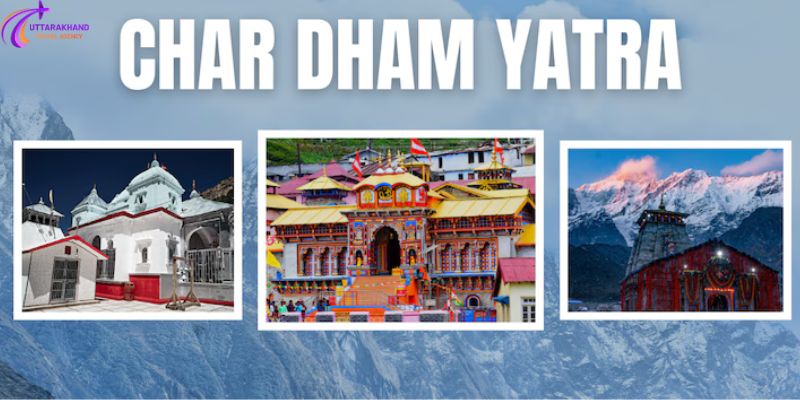
What Does Char Dham Yatra Mean? Unveiling the Hindu Mythology Behind the Pilgrimage
Uncategoried
Introduction
India, the land of spirituality and faith, holds numerous sacred traditions close to its heart—one of the most revered being the Char Dham Yatra. For millions of Hindus, undertaking this spiritual journey is not just a religious duty but a pathway to salvation. In this blog, we will explore the true meaning of Char Dham Yatra and the fascinating Hindu mythology that surrounds this divine pilgrimage.
What is Char Dham Yatra?
The term "Char Dham" literally means "Four Abodes" or "Four Sacred Seats". The Char Dham Yatra refers to the pilgrimage to four sacred sites located in the Indian Himalayas:
Yamunotri
Gangotri
Kedarnath
Badrinath
These four destinations are situated in the state of Uttarakhand, and the journey to them is often called the Chhota Char Dham to distinguish it from the original Char Dham circuit defined by Adi Shankaracharya, which includes Badrinath (North), Rameswaram (South), Dwarka (West), and Puri (East).
In this blog, we are focusing on the Himalayan Char Dham Yatra—Yamunotri, Gangotri, Kedarnath, and Badrinath.
Mythological Significance of Each Char Dham
1. Yamunotri – The Source of the River Yamuna
According to Hindu mythology, Goddess Yamuna, the sister of Yama (the God of Death), resides here. It is believed that a holy dip in the Yamuna River cleanses the soul and protects devotees from untimely death. The temple is dedicated to Goddess Yamuna, and the sacred Yamunotri glacier is the source of the river.
2. Gangotri – The Origin of the River Ganga
Gangotri is the origin point of the sacred Ganges River (Ganga). As per mythology, Goddess Ganga descended from the heavens to Earth in human form to cleanse the souls of King Bhagirath’s ancestors. The temple at Gangotri honors this event and celebrates Ganga’s purifying power. The actual glacier, Gaumukh, is the physical origin of the river.
3. Kedarnath – The Seat of Lord Shiva
Kedarnath is one of the most sacred Shiva temples in the world and is a part of the Panch Kedar. Legend says that after the battle of Kurukshetra, the Pandavas sought Lord Shiva’s forgiveness. To avoid them, Shiva took the form of a bull and hid in Kedarnath. When discovered, he dived into the ground, leaving behind his hump. The temple is built at the spot where his hump appeared.
4. Badrinath – The Abode of Lord Vishnu
Badrinath is the only shrine among the Char Dham dedicated to Lord Vishnu. According to Hindu lore, Lord Vishnu meditated here for thousands of years under a Badri tree (Indian Jujube). His consort, Goddess Lakshmi, protected him from harsh weather by taking the form of the tree. The Badrinath Temple marks this holy site and is considered one of the holiest among Vaishnavites.The Spiritual Purpose of the Char Dham Yatra
Hindus believe that completing the Char Dham Yatra washes away all sins and grants moksha (liberation from the cycle of birth and death). It’s not merely a journey through the mountains—it's a spiritual awakening that reconnects the devotee with divinity and inner peace.
When is the Best Time to Undertake the Yatra?
The Char Dham temples are typically open from April/May to October/November, depending on the weather. The ideal months are May to June and September to October, when the climate is relatively pleasant, and the routes are accessible.
Conclusion
The Char Dham Yatra is more than a religious journey—it's a sacred quest for spiritual enlightenment. Rooted deeply in Hindu mythology, each site tells a powerful story of divine intervention, devotion, and eternal faith. Whether you're a seeker of peace or a devotee fulfilling a lifelong vow, the Char Dham Yatra offers an experience that is both humbling and transformative.
FAQs
- Q1: Is Char Dham Yatra difficult?
- Yes, some stretches are physically demanding due to high altitudes, but with proper preparation, it is manageable.
- Q2: Can we complete Char Dham Yatra by road?
- Yes, all four Dhams are connected by road, and many pilgrims opt for road travel. Helicopter services are also available.
- Q3: Do I need registration for Char Dham Yatra?
- Yes, the Uttarakhand government mandates online or offline registration for all pilgrims for safety and management purposes.
- Q4: What are the health precautions for Char Dham Yatra?
- Carry warm clothes, maintain hydration, and get a health checkup before the journey, especially for elderly or people with pre-existing conditions.

